How to Complete the Pegfinity Upgrade Tree
A session-by-session spend path for the 150+ node Steam release.
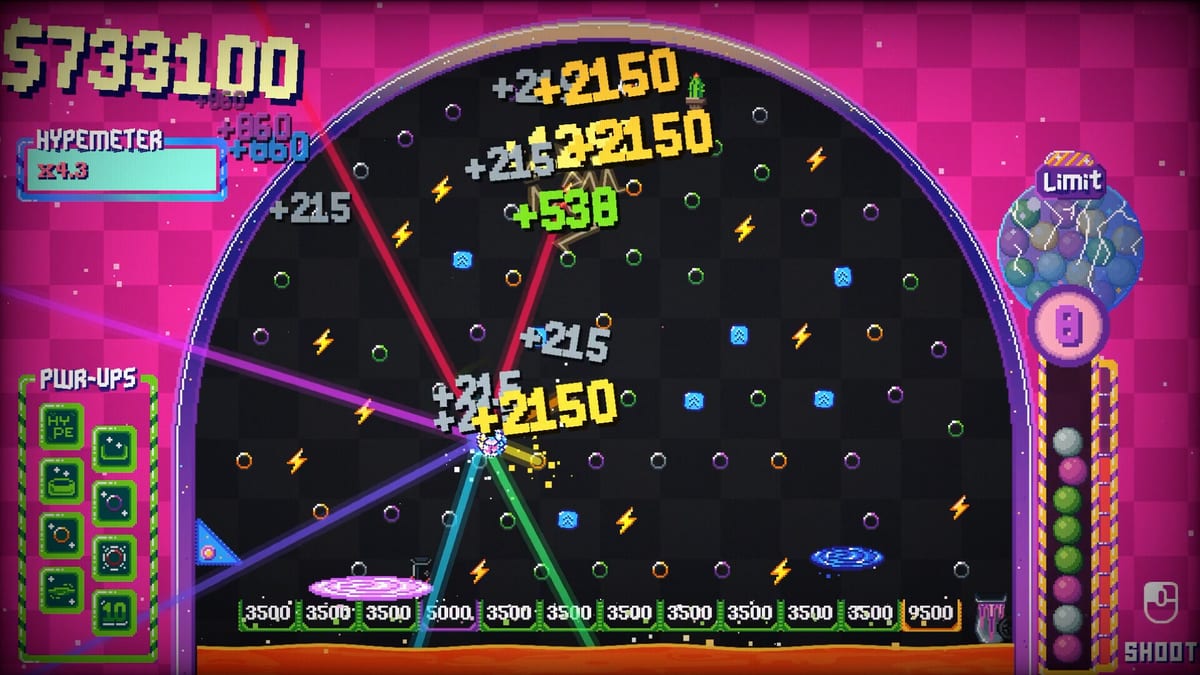
Pegfinity does not hide a second map behind the tree. Completing the game means buying through the upgrade web, seeing the ridiculous late gadgets, and deciding the last stretch is enough. Steam reviewers split on that last stretch. Some call it a five-hour dopamine toy. Others say every node takes two or three full runs and the scaling never snowballs. This walkthrough assumes you want to finish without rage-grinding baskets or Graveyard.
Use this page with the upgrade order planner as a checklist, the upgrade tier list when two nodes cost the same, and known issues if a price looks like a typo.
How the tree is shaped
The demo sold a fair idea: a limited number of upgrade slots, so you could skip cheap filler and save for a toy. Full Pegfinity still lets you skip, but the graph is longer and more linear than a true buildcraft game. You will see nodes that unlock the next node in the same branch. That is why players say there is little choice. There is choice, it is just skip-or-buy, not three equal archetypes. Treat every purchase as either board-changing or score-scaling. If it is neither, leave it.
Board-changing nodes: new peg types, gadgets, ball behaviours that add collisions. Score-scaling nodes: peg value, multipliers, Hypemeter. Trap-shaped nodes: many basket upgrades, some extra-ball chances, combo-max nodes that add a few percent, and anything that dilutes a queue you already like. Details on those traps live in the gadget and ball lists.
Early game — first hour
Goals: peg value, peg density, Hypemeter, first special peg. Play short runs. Cash out as soon as you can afford the next real node instead of forcing a cinematic board. Aim using the controls guide so you are not leaking minutes into the meter. Cactus is the usual first special peg because spines create extra hits without extra launches. UFO and Frog are the follow-ups. Read special pegs before you spend 20k on a tooltip you do not understand.
Do not open every ball type. Do not max baskets. Do not sit on cash waiting for a million-gold node while two cheap density nodes are available. Early Pegfinity rewards tempo.
Mid game — gadgets come online
Once cactus or firework exists, buy a feeder gadget: portal, pinball bumper, or laser. The gadgets guide explains why a portal without a feeder is just a moving hole. Mid game is also when Hypemeter stops being optional. If combos still drop to zero between balls, you bought extra balls too soon. Fix overlap first, queue size second. See Hypemeter combos.
Expect the grind complaint to start here. Nodes jump from thousands to tens of thousands. The antidote is a loop, not a lucky snipe: cactus plus portal, laser plus UFO, cannon plus dense pegs. When a run can print 100k because the board plays itself, you have permission to save for a big node. When every run still pays 10k, you are missing a feeder. Buy interactions, not vanity.
Late game — millions and Graveyard
Late Pegfinity is where Steam feedback gets sharp. Launch reviews reported Graveyard / gravestone costing 90 million instead of 9 million. Steam patch 1.2.1 states that extra zero is fixed. Buy the node as a late peg. If your client still shows 90 million, verify the build on patch notes before you farm. Completing the tree does not require eating a leftover typo.
Ball dilution is the other late trap. Watermelons, basketballs, and disco balls sound like a victory lap. If they replace a queue that was already printing, your income drops and the grind returns. Unlock late balls after legendary pegs and density are high, or skip them. The ball tier list is blunt about this.
There is no prestige. When the last interesting gadget is owned, the remaining nodes are score padding. Steam players who “beat it” describe a slot-zombie finish. You can stop when the board is already absurd. The wiki will not tell you to farm an extra evening for a 0.5 percent node.
Session checklist
- Buy the cheapest board-changing node you still lack.
- If two nodes are similar, prefer collisions over catch-bins.
- If a price looks ten times too high, search known issues.
- If runs pay less after a purchase, you diluted the queue — undo that plan on the next skip.
- Cash out early when the next node is in range. Hero runs are for fun, not for efficiency.
When you want a shorter list without prose, use the upgrade order planner. When you want to know if Pegfinity is worth the intro sale at all, read the review.
Frequently Asked Questions
Quick answers players ask after the Steam launch.
Is there a prestige or NG+ in Pegfinity?
No. Progress is the permanent tree. Finish the interesting gadgets, then stop. There is no reset layer.
Why do upgrades feel like they take three runs each?
Should I save for Graveyard?
Yes, as a late peg. 1.2.1 fixed the ten-times price. If you still see 90 million, check patch notes.
Can I skip upgrades?
Yes. The tree allows skipping. Skipping filler is the intended way to play, including in the 35-upgrade demo.